What 2 days at DPW taught us about rolling out AI in procurement
Technology & AI
By Dimitri Poliderakis
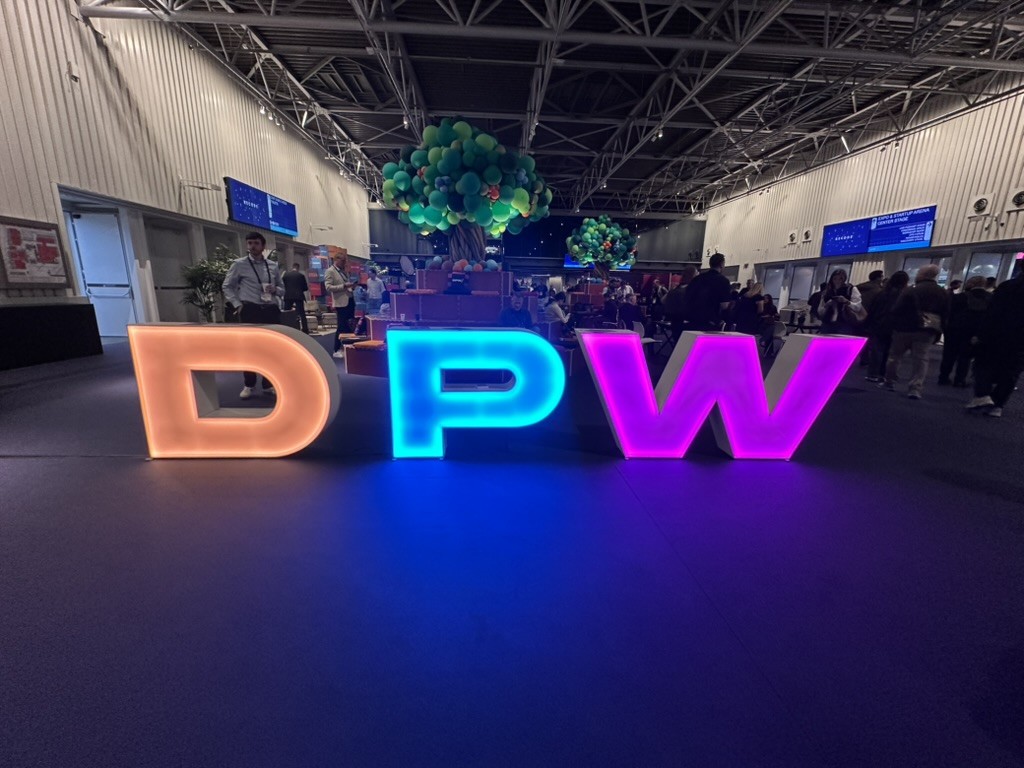
AI in procurement works when you change the work first, start with your most painful process, and count the result net of what it costs. Buying more models and running more pilots doesn't get you there.
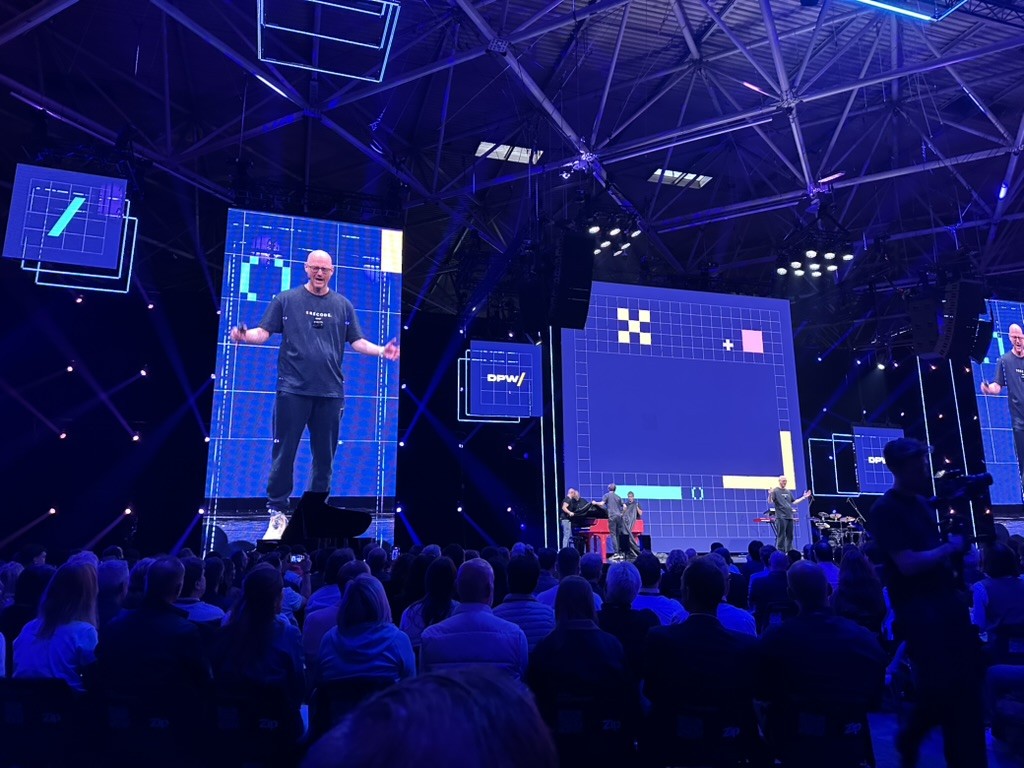
That was the message from almost every stage at DPW Amsterdam this year. Our VP of Product & AI, Dimitri Poliderakis, spent two days in sessions with Siemens, Heineken, Primark, AstraZeneca, Mercedes-Benz, SAP, McKinsey and HFS Research, and in hallway conversations with procurement leaders from manufacturing and chemicals.
The conference theme was RECODE. The short version: recode the work, not just the tools. Below are the nine lessons we brought home, each with one thing your team can do this quarter, plus a 90-day checklist at the end.

Dimitri Poliderakis, VP of Product & AI and Karim Besbes, CTO
1. Change the process before you add AI
Only about 10% of AI success comes from the models. Tiger Tyagarajan opened the conference with a split that stuck with us all week: 10% models, 20% tech, data and infrastructure, 70% people, process redesign and adoption.
His warning was blunt: "we've automated the mess." Put AI on top of an old process and you get the old process, faster. Siemens, Heineken, Primark and AstraZeneca all made the same point from the buyer's side.
Tyagarajan also laid out where AI value actually comes from:
Level | What it means | Typical result |
|---|---|---|
Deploy | Off-the-shelf productivity tools | ~20% efficiency |
Reshape | Re-engineered core workflows | ~40% better cost and speed |
Invent | New business models and value chains | Competitive advantage |
Most procurement teams we talk to are at Deploy: a copilot here, a summarizer there. The jump to Reshape is where the real numbers are, and it starts on a whiteboard, not in a vendor demo.
Try this: before you buy any AI tool, map the process it will touch step by step and mark what goes away. If nothing goes away, expect Deploy-level results at best.

2. Stop celebrating pilots
About 80% of boards say their company uses AI, but fewer than 25% see a return. Tyagarajan called it "death by a thousand pilots." Saurabh Gupta of HFS Research, presenting a survey of 150 procurement leaders, saw the same thing: FOMO drives the spend, and full rollouts lag behind.
The SAP Ariba session added numbers. Generic LLMs land around 80% accuracy. 42% of companies name data access and quality as their biggest barrier (citing Anthropic research). 74% of organizations are stuck in pilot mode with no path to scale (citing BCG).
HFS put it plainly: "stop celebrating AI pilots." A pilot that can't scale is a cost, not a win.
Try this: give every pilot a one-page scale plan before it starts. Four lines: the process it changes, the data it needs, who owns it after launch, and the number that decides go or stop.
3. Start from your ERP, and fix the data where your first use case runs
AI is only as good as the data it can reach, and procurement data lives in silos. Engineering designs a part, procurement sources it, finance pays for it. The process crosses departments; the data stays locked in each team's system. An AI working on one step never sees the whole picture.
Siemens made this concrete. Klaus Staubitzer showed one physical part with five different part numbers, one per site: Chemnitz, Nanjing, Zug, Vienna, Karlsruhe. Their fix is a single material ID for every part, and a "share unless" rule: data is open by default unless there's a reason to restrict it.
AstraZeneca (Nataša Vidmar) followed the same order. One source-to-pay platform with every supplier in it, then clean data, then training. AI came last.
For most mid-market manufacturers, the ERP is already the system of record. Every AI tool you add has to read from it and write back to it. That makes ERP data quality the first thing to check, not the last.
The good news: you don't need perfect data everywhere. You need clean data where your first use case runs.
Try this: name the one data problem that blocks your top use case (duplicate part numbers, messy supplier records, missing promise dates) and fix that first.
4. Start with your biggest pain, prove it, then scale
The teams making progress picked a few high-value use cases and proved them before expanding. Primark (Laura Cook) mapped about 50 possible AI use cases across ten areas of procurement, from intake to payments and PO management. Then they starred three to prove first: supplier onboarding, third-party risk and sourcing.
Where does the pain actually sit? A survey shown on the main stage put the biggest delays in contracting (40%), category strategy (29%) and sourcing (28%). AI budgets, meanwhile, go mostly to spend classification (54%), sourcing (50%) and contracting (35%), and 67% of leaders want AI-driven insight for category strategy. Check those numbers against your own: where your team loses time and where your AI money goes don't always match.
That's the right method. Which three you star depends on where your pain sits, and for manufacturers it often sits somewhere less glamorous than sourcing.
In Dimitri's hallway conversations, the pain that came up most was the daily grind of PO follow-up: chasing suppliers for confirmations, checking delivery dates, digging through emails and PDFs. Procurement is still a very manual job. Every hour spent there is an hour not spent on supplier strategy, like making sure a flood or a trade dispute doesn't stop your line.
We think the PO deserves a spot in the first wave, for three reasons:
The pain is daily and shared. Every buyer feels it, so adoption doesn't need selling.
The data is already in your ERP. Open POs, promise dates and supplier contacts are there. No new data foundation required.
The result is easy to measure. Confirmation rate, hours spent chasing, late deliveries caught early. A clear before-and-after makes the first win easy to defend, and it funds the next one.
Try this: list your candidate use cases, score each on pain and ease, and star two or three. Favor the ones where you can show a before-and-after number within 90 days.
5. Count the net ROI, not the headline
Efficiency gains and real savings are two different numbers. Siemens reported 20 to 60% efficiency gains from AI, but only 10 to 30% in actual savings. Still significant, but only the second number reaches the P&L.
Heineken (Hervé Le Faou) was the most candid speaker on this. AI delivered savings, but a meaningful share went back into the cost of running the AI itself. It also added to their carbon footprint, which matters for a company with climate targets.
HFS added a warning about framing. Business cases built around headcount cuts make people resist, because AI gets sold as a job killer. HFS suggests building the case around performance, personalization, prediction and productivity instead. In their survey, leaders cited better data-driven decisions (58%) and agility (47%) as top reasons to adopt AI. Headcount pressure came third (45%).
Try this: report AI value net of its running costs, and track what the business actually feels: cycle time, on-time delivery, how fast decisions get made. Savings belong on the slide, just not alone.

6. You don't need to buy the whole journey
With more than 950 procurement tech vendors on the market (Adam Brown, DPG Labs), every one of them claiming to do everything, the architecture choice is yours to make. Brown argued the classic source-to-pay suite is losing its grip as AI agents blur the lines between products. The big suites, meanwhile, keep expanding to cover every step from intake to payment.
A procurement leader at a global chemicals company described four setups she expects companies to land on:
Setup | What it looks like | Watch out for |
|---|---|---|
Full suite | One ERP or source-to-pay vendor for everything | Cost, slow release cycles |
Suite plus point solutions | The core platform, with specialist tools where it's weak | Integration upkeep |
Best-of-breed everywhere | A specialist tool for every step, stitched together | Too many vendors to manage |
ERP plus one intelligence layer | The ERP as the record, with a single AI layer working across it | Choosing which pain to solve first |
She was skeptical of the full suite. In her experience, the big platforms are slow to ship new capabilities, and what they ship is often underwhelming. Full source-to-pay suites are also priced for the Fortune 500, which rules them out for many mid-market manufacturers.
Three filters came up again and again:
Your ERP comes first. It's the system of record every tool must read from and write back to.
Size matters. A suite built for a global enterprise may be overkill for a 300-person plant.
Cloud or on-premise. Defense and other security-sensitive industries often need on-premise options.
Try this: decide which of the four setups you're building toward, then judge every vendor on how well it fits that picture. Don't let a vendor's roadmap decide for you.
7. Decide what your agents can do alone
"AI agents" was the most-used phrase at DPW, so the real question is how much you let them do without a human. Mercedes-Benz (with GEP) gave the clearest model, going from idea to execution in under 12 months with three levels of autonomy:
Level | Who acts | Use it for |
|---|---|---|
Fully autonomous | The agent | Routine, low-risk, well-defined work |
Semi-autonomous | The agent, with a human approving | Work with real money or supplier impact |
Human-led | A person, supported by AI | Judgment calls and strategic decisions |
Their biggest challenge wasn't the tech. It was adoption, and they backed it with training and feedback loops.
Data sharing needs rules too. Benchmarks need pooled data, and buyers will share on clear terms. The chemicals leader drew her line here: averages are fine; lowest and highest prices paid, or who sells what to whom, are not. Direct materials are more sensitive than indirect, because how a manufacturer buys them is part of its competitive edge.
Try this: for each agent, write down three lists: what it may do alone, what needs approval, and what it must never touch. Set your data-sharing rules before a vendor's benchmark asks for your data.
8. Bring finance in early
Procurement and finance are heading for the same seat at the table. In the CFO session (Michaela Mayrhofer, Valentina Fanni and Chris Sawchuk), the speakers argued that as AI takes the busywork off both teams, both will move toward strategy, and they'll get there faster together. Much of a company's money leaves through procurement, so finance wants to see where it goes. Procurement needs finance's view of budgets and margins.
Their advice: organize around end-to-end processes, not departments, because AI crosses silos easily. And measure procurement on how it moves the P&L, not just savings per item.
McKinsey (Theano Liakopoulou) called supplier and partner management an enterprise-wide challenge with procurement at its center. HFS went further, suggesting procurement become the company's "AI ecosystem builder," starting with a simple registry of AI vendors before tool sprawl sets in.
Try this: give your CFO real-time visibility into committed spend and supplier delivery risk. It's the fastest way to make procurement's AI work count in finance's terms.
9. Ship early, learn daily
The fastest teams ship at 70 to 80% done and improve from real use. Tyagarajan argued that every AI system needs a learning loop from day one, one that learns daily from what it saw the day before. Monthly reviews are too slow. Siemens said much the same: embrace imperfect.
His closing slide was about mindset more than tools: intellectual humility (nobody has this figured out yet), radical adaptability, and the ability to thrive in productive instability. Tariffs, geopolitics and supply shocks aren't going away, and neither is the pace of AI.
The CPO Playbook panel named curiosity and judgment as the human skills that matter most now. Be limitless in imagining what AI could do, and practical in rolling it out one step at a time.
Try this: for every AI tool you run, name who reviews its mistakes, how often, and how those corrections get back into the system.
Your 90-day starting checklist
Nine lessons, nine actions. Most take a meeting, not a budget.
Map the process your first AI use case will touch, and decide what goes away (lesson 1)
Write a scale plan and a go/stop number for every pilot (lesson 2)
Fix the one data problem blocking your top use case (lesson 3)
Score use cases on pain and ease, and star two or three (lesson 4)
Agree how you'll measure net value, AI running costs included (lesson 5)
Pick which of the four setups you're building toward (lesson 6)
Write autonomy and data-sharing rules for every agent (lesson 7)
Share real-time spend visibility with your CFO (lesson 8)
Name who reviews AI mistakes, and how often (lesson 9)
Where we come in
Lesson 4 made the case for putting the PO in your first wave: the pain is daily, the data already sits in your ERP, and the result is easy to measure. That’s the bet we’ve built Axya on.
Axya plugs into the ERP you already run, so there’s no new suite to adopt and no data foundation to rebuild first. It takes over the follow-up your buyers spend their days on: supplier confirmations, delivery date changes, and the email and PDF chasing in between.
The results show up in the outcomes lesson 5 says to track. J.A. Larue, a snow removal equipment manufacturer running Infor CSI, measured a 60% drop in time spent managing POs and 25% fewer late deliveries.
If "automating the mess" is on your shortlist, let's talk.